Fast car lockout services in Ashland, MO are a piece of equipment work more than a piece of luck, and the difference shows on the door afterwards. Two cars parked side by side can need two different openings, because the latch, the linkage, and the trim are built differently underneath. One door gives a tool a clear path to the rod that releases the latch.
Another has a shield, a cable instead of a rod, and a weatherstrip that tears if a wedge goes in the wrong spot. We bring a mobile kit out of Columbia and we choose the opening to suit the car in front of us, rather than forcing one method onto every vehicle in Ashland.
An example close to home
Ashland is a Boone County town, and the lockouts here cluster in a few recognizable spots. A driveway on a residential street, where the keys went onto the seat while both hands carried groceries. A lot near the shops, where a driver stepped out to read a sign and the door swung shut. A curbside space on a narrower street, where the driver door cannot open far and a rear door becomes the better route.
A trailhead or park entrance, where a car sits for a while and the key is left in the cupholder. Ashland is on the same southern Boone County route that reaches Columbia, and the van also covers Hallsville, Sturgeon, Harrisburg, and Rocheport farther north and west. Describe the spot by what stands next to it, and we can find the car without circling the block.
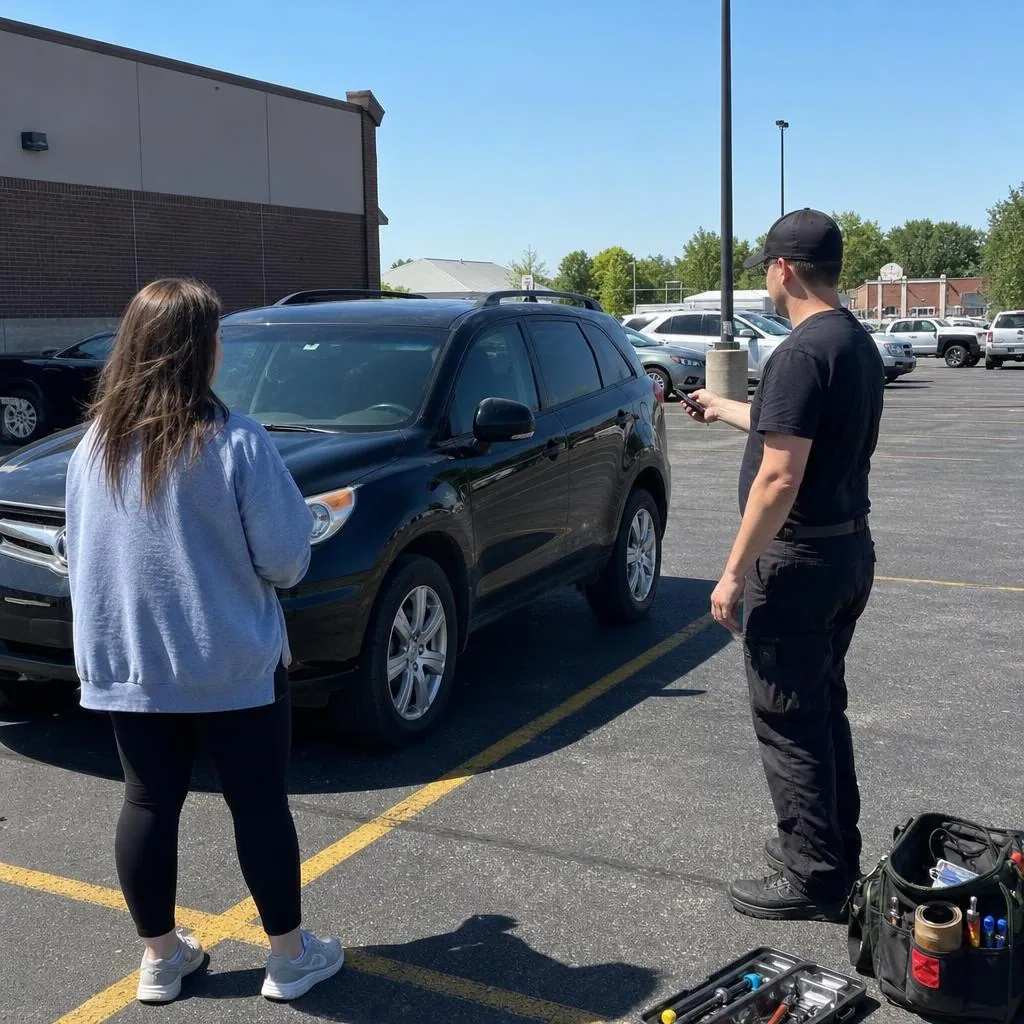
The shape of the opening follows the door, not the brand alone. The first question is whether the latch is mechanical or driven by an actuator, because a mechanical latch can be reached through the gap and an electronic one often cannot. The second is what connects the handle to the latch, since an older car usually has a steel rod while a newer one may use a cable that must not be kinked.
The third is how the door is trimmed, because a tight rubber seal and a plastic edge guard limit how far a tool can travel inside. The fourth is whether the vehicle is deadlocked, which means the interior handles and the release are disabled from the outside until the car is unlocked electronically.
The kit is small and unglamorous. A wedge opens a controlled gap at the top of the door, never more than the seal will take. A protective sleeve slides in with the wedge so the paint and the rubber meet plastic rather than metal. A long reach rod then travels down the inside of the door to the latch or to the lock button, and its tip is shaped so it hooks rather than scrapes.
For a car with a vertical lock button, the rod presses down or lifts from the inside. For a car with no visible button, the rod works the interior handle or the release lever directly. Every one of those steps is chosen after looking at the door, not before.

Some vehicles in Ashland make the opening slower, and it is worth knowing which. A car with a deadlocking system will not open through the interior handle at all, so the work has to go after the actuator or the lock cylinder. A door with a factory anti-theft shield over the linkage hides the rod behind a steel plate, and the tool has to be routed around it.
A vehicle with an aftermarket alarm can trigger a siren the moment a door circuit wakes up. A heavily sound deadened or tinted door reduces the room inside the panel. None of these make a lockout impossible. They change the route, and they are exactly why we ask for the make, the model, and the model year before we set out.
The marks left by a rushed opening outlast the lockout itself. A chip in the paint at the top of the door where the wedge sat. A weatherstrip stretched until it whistles at highway speed. A plastic trim piece cracked because it was pried instead of unclipped. A window regulator bent by a tool pressed against the glass. We treat all four as failures.
The wedge goes in at a seam the manufacturer already designed to flex, the sleeve stays in place the whole time, and the rod is moved in small increments while we watch the latch through the glass instead of pushing blind. That patience is the whole method, and it is why the door looks untouched when we step back.
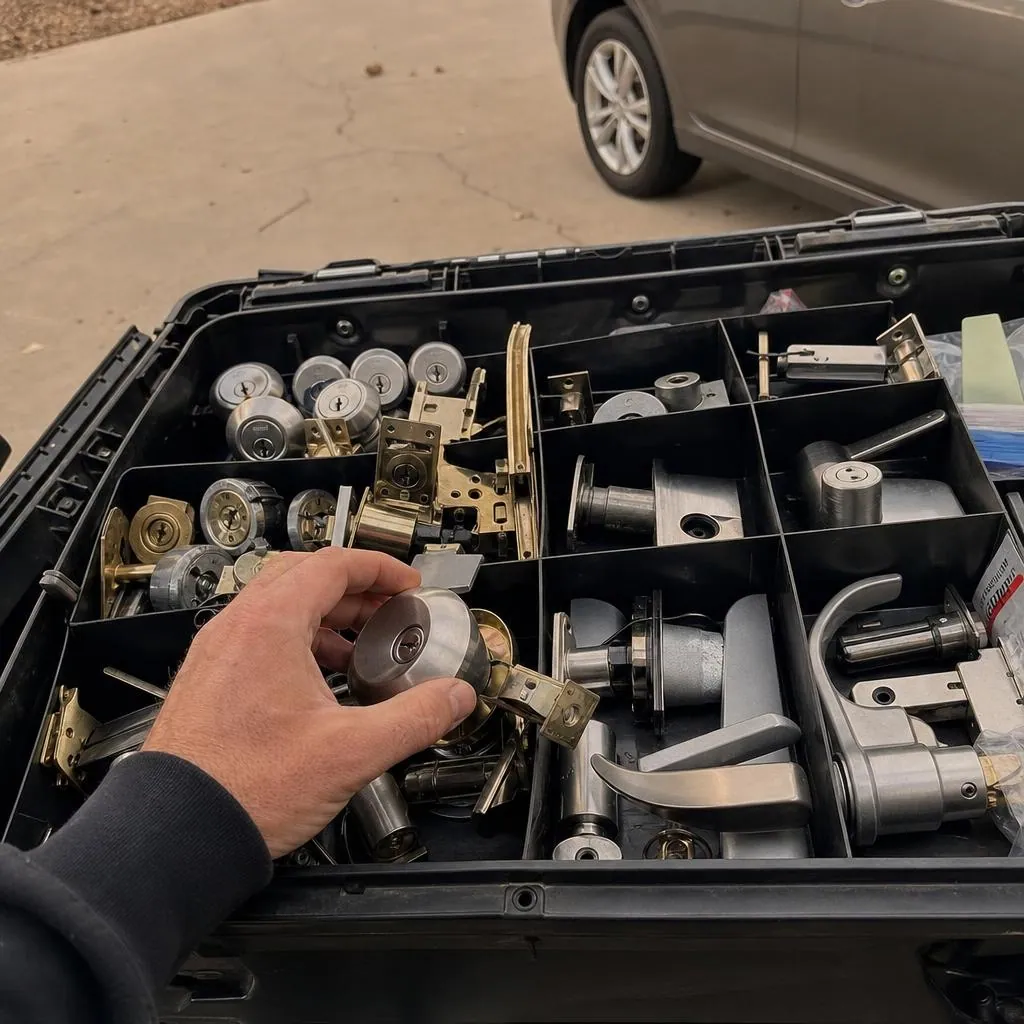
Once the latch releases, the job is not finished. We open and close the door to confirm the latch catches on both stages. We cycle the interior lock and the exterior key or fob to make sure nothing inside the panel was disturbed. We check the trim edge and the weatherstrip at the spot the tools entered, and we run the window up and down if the vehicle allows it with the door shut. Then we hand the keys back and ask you to start the car before we pack up, because a lockout that ends with a vehicle that will not start has only solved half the problem.
Frequently asked questions
Why are fast car lockout services in Ashland, MO different from one car to the next?
The latch, the linkage, and the trim decide the route. A mechanical latch with an exposed rod is a short opening, while a deadlocked car with a shielded actuator takes a different approach.
How long does it take to open a door?
It depends on the vehicle, not on a fixed figure. A straightforward mechanical door opens quickly, and a deadlocked one with a factory shield takes longer. We would rather be accurate than promise a figure.
Will the weatherstrip or the paint be damaged?
That is what the sleeve and the limited wedge are for. We protect the seam at the top of the door, keep plastic against the paint, and inspect both before we leave.
My car has an alarm that goes off when a door opens. Can you still open it?
Yes. Tell us when you call, because an alarm changes the order of the steps, and you will want to be ready with the fob or the disarm code.
Can you open a car that is deadlocked in Ashland?
Often yes, though the route differs. A deadlocked vehicle disables the interior handle, so the work goes after the actuator or the lock cylinder instead.
What do you need from me before you start?
The make, the model, the model year, and a description of where the car is parked. Have the registration or title with your identification ready, since that comes first.