An emergency locksmith in Columbia, MO is called when a door or a car stops cooperating at the worst possible moment. The word emergency covers more ground than people expect. It includes the tenant standing outside a locked apartment with groceries going warm, the shop owner who cannot get the storefront open before the first customer, and the driver whose car key is visible through the window on the passenger seat. It also covers the quieter version, where nothing is lost and the lock simply stopped working. What makes all of these urgent is not danger but dependence: the day cannot go on until the thing opens.
An example close to home
A late call from an apartment building off one of the north-side corridors in Columbia is a good picture of how this goes. A tenant had moved in a week earlier and been handed one key, which turned in the front door and jammed in the back one. The old tenant had left the back deadbolt on a different key, and nobody had noticed because the front door was the one everybody used.
Nothing was broken and nobody had been locked out yet. The visit ended with both exterior doors on a single key, a second copy cut, and the landlord informed that the rear cylinder had been mixed all along. One call covered the immediate annoyance and the reason it had happened, which is what the tenant actually wanted to know.
The calls that arrive through a week fall into a handful of shapes. Apartments generate more than any other property type, because a single building holds dozens of doors that all fail the same way. Renters who have just moved in call about a key that does not turn a deadbolt that nobody told them about. Storefront calls come early rather than late, when staff reach the door and find that the cylinder has finally given up.
Vehicles account for the rest, usually a key shut inside a car in a parking lot while the engine is off and the doors are down. Around the edges sit the smaller jobs that feel huge at the time: a key broken inside a lock, a door that will not close before a shift ends, a tenant leaving and the landlord needing the locks changed before the next one arrives.
Before anyone is called, three quick checks can save the visit. Try the other doors first, since a back door or a garage entry is often unlocked when the front one is not. Then check whether the door is genuinely locked or simply stuck, because a swollen frame and a thrown bolt look identical from the outside and behave nothing alike.
Look for the spare key you swore you gave someone. If the lock has a key stuck inside it, leave the broken piece where it is instead of picking at it with anything sharp. A key snapped off flush can be removed in a single visit, while a key pushed deeper with a screwdriver usually means the cylinder has to be replaced.
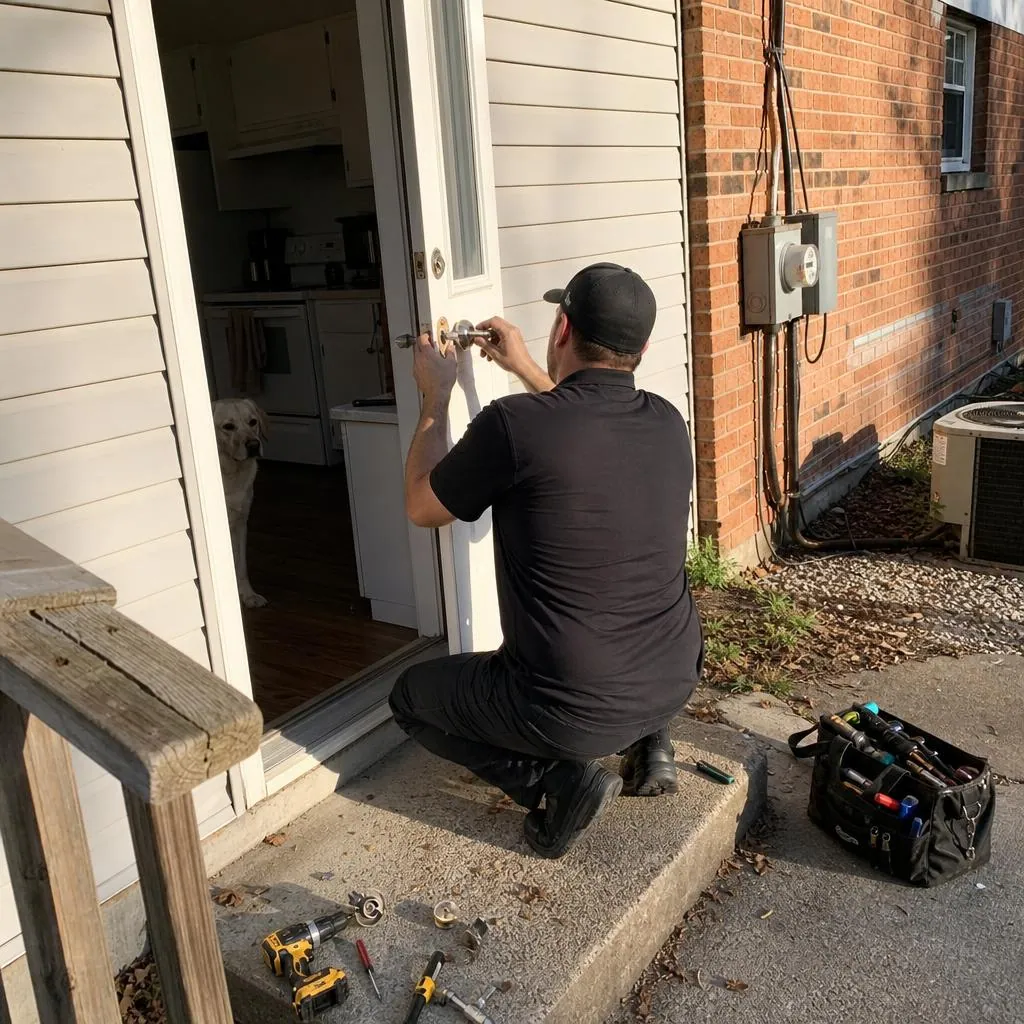
A property can present a door problem, a car problem, or a business problem, and each takes a different approach. On a house or an apartment, the usual work is a non-destructive opening, followed by a repair to the latch, the strike, or the cylinder. On a car, the opening happens through the door seal and the linkage, and the ignition is checked separately, since a key that opens the door may still refuse to start the engine.
On a storefront, the door is also an exit, which means anything added to it has to release properly for the people leaving. Offices and shops also raise the question a house never does: who holds a copy, and what happens when that person moves on. Our work covers all three, and the tools for each ride in the same truck.
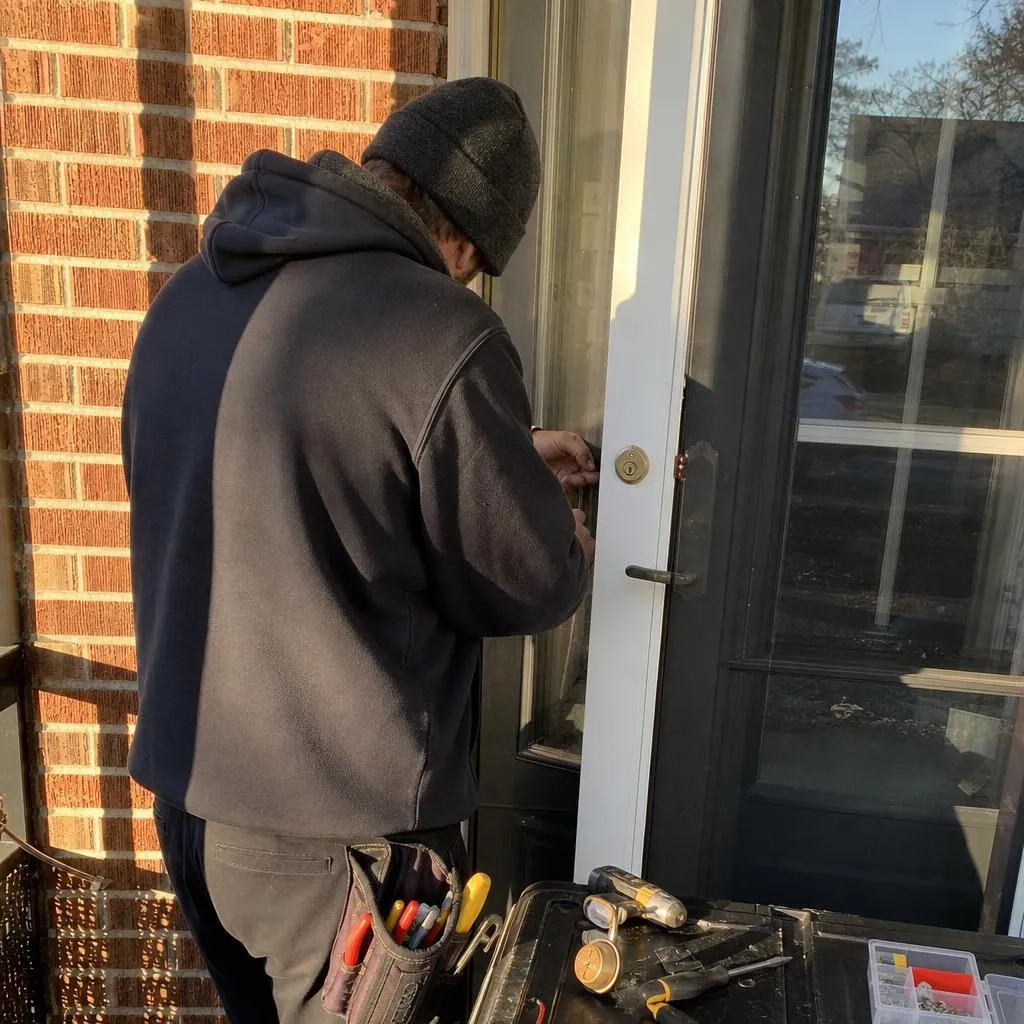
A lock that has been forced, drilled, or worn out is not the same as a lock that is simply closed. When a door has been opened without a key, the cylinder and the strike plate are inspected for damage before anything else is decided. Sometimes a repair will hold, and the original hardware can stay.
Other times the internal pins are distorted, or the frame has been split around the latch, and a replacement is the honest answer. We explain which case you are in and why, and we keep the old parts available so you can see what failed. If the door is beyond a locksmith's trade, we say that too rather than bill for a repair that will not last.
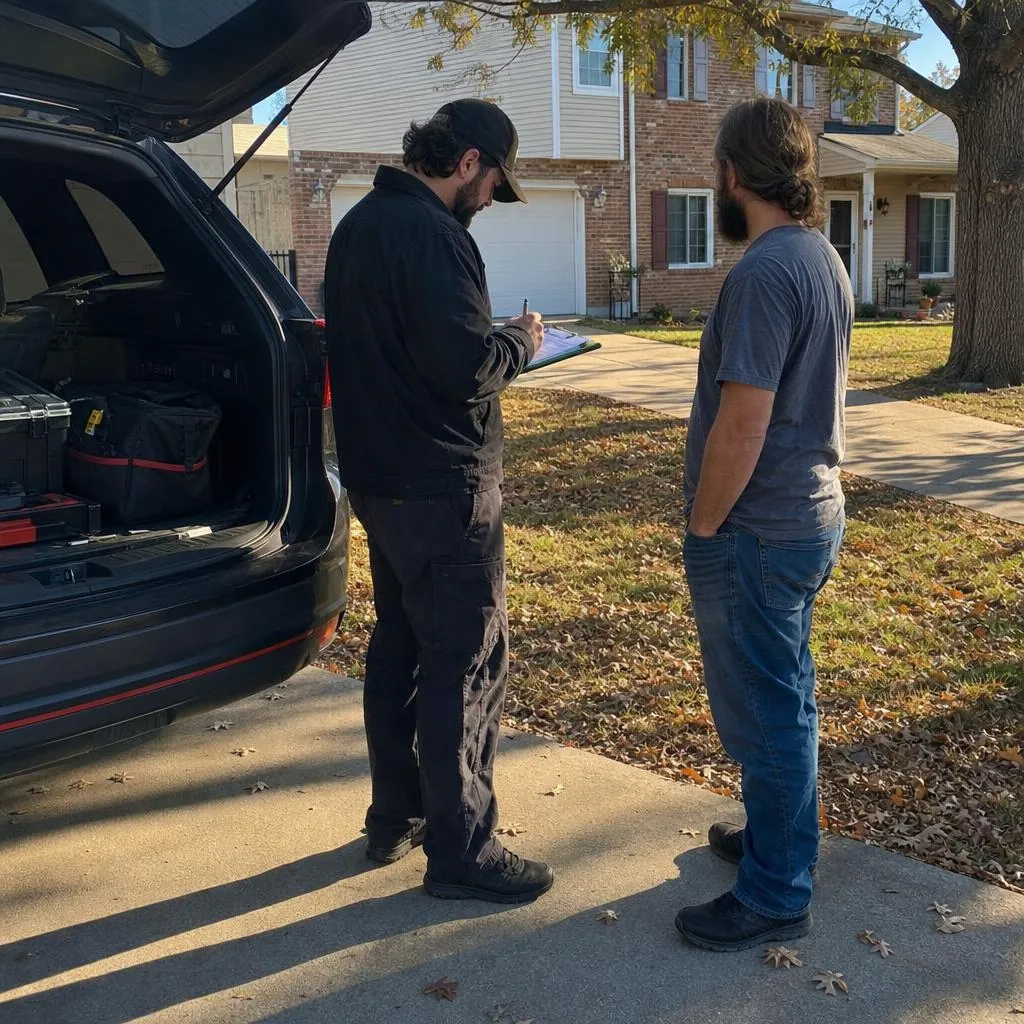
Authorization is part of the job, not a formality. For a home, an identification that shows the address is enough. For a rental, the owner or a manager acting with the owner's permission has to agree to the work, even when the tenant is the one calling. For a business, the person who approves the visit has to be able to speak for the building, which during a shift change is not always obvious.
For a vehicle, the title or the registration in your name settles it. This step protects everybody involved, including the person who locked themselves out of a place they have every right to enter. It is asked of every customer, every time, without exceptions made for how the call sounds.
Frequently asked questions
What makes a locksmith visit an emergency rather than an appointment?
The problem is stopping the day. A door you cannot lock before work, a car you cannot drive, or a building you cannot secure are all emergencies in practice.
Can you open a door without damaging it?
In most cases yes. Picking, bypassing, and shimming leave the lock working, and damage is a last resort rather than a starting point.
What do I need to show before you open anything?
Photo identification with the address for a property, and the title or registration for a vehicle. A rental also needs the owner's approval.
Is an emergency locksmith in Columbia, MO able to work on cars too?
Yes. Car openings, spare keys, chip matching, and ignition repair are part of the same service as the door work.
What should I do with a key broken off in the lock?
Leave it alone. The broken piece usually comes out in one visit, while forcing it inward can ruin the cylinder.
Should I call before I know what is wrong?
That helps. A description of what the key and the door are doing lets us bring the right parts instead of guessing at the door.
All told, an emergency locksmith is measured by a single result: the day can carry on afterwards. Everything else, the parts, the paperwork, and the explanation, follows after the door is open.